ProtonPACS vs EMSOW vs Medicai for DICOM Routing
Many radiology teams run into routing failures when their DICOM images must cross different facilities and external partners. Some tools handle internal transfer but hit limits once images leave their network, leaving staff to chase missing studies or re-enter patient data.
By the end of this comparison you will see which platform supports multi-location routing without extra gateways, which one keeps studies inside your compliance boundary, and which option fits the volume and partner mix your practice actually handles. The verdict addresses ProtonPACS, EMSOW, and Medicai directly.
Quick Verdict: ProtonPACS vs EMSOW vs Medicai for DICOM Routing
Medicai leads in DICOM routing throughput with 50M+ yearly API transactions while ProtonPACS and EMSOW focus on different deployment models. Each platform handles study forwarding differently depending on infrastructure needs. The choice depends on facility size, deployment preferences, and budget considerations.
Multi-site cloud routing favors Medicai because the platform processes 1M+ studies per year across distributed locations. The routing engine manages high volumes of DICOM studies through cloud infrastructure. This approach supports growth without local server management.
On-premise control typically suits organizations that select ProtonPACS or EMSOW. These platforms allow facilities to maintain direct oversight of DICOM nodes and routing rules. Local deployment provides complete authority over data location and security policies.
Budget-constrained small practices often find Medicai practical because the system requires no local hardware investment. The cloud model eliminates upfront infrastructure costs while maintaining HIPAA and GDPR compliance. Organizations access the same routing capabilities used by larger health systems.
Performance benchmarks show Medicai stores 1.7M+ studies while handling substantial transaction volumes. The platform supports DICOM routing across multiple facilities without additional middleware. Research suggests this scale indicates proven reliability for high-volume environments.
At a glance: how Medicai compares to ProtonPACS, EMSOW, Medicai for DICOM Routing on the features that matter most.
| Feature | Medicai | ProtonPACS | EMSOW | Medicai for DICOM Routing |
|---|---|---|---|---|
| DICOM Routing | ✓ | — | — | — |
What Is Medicai?
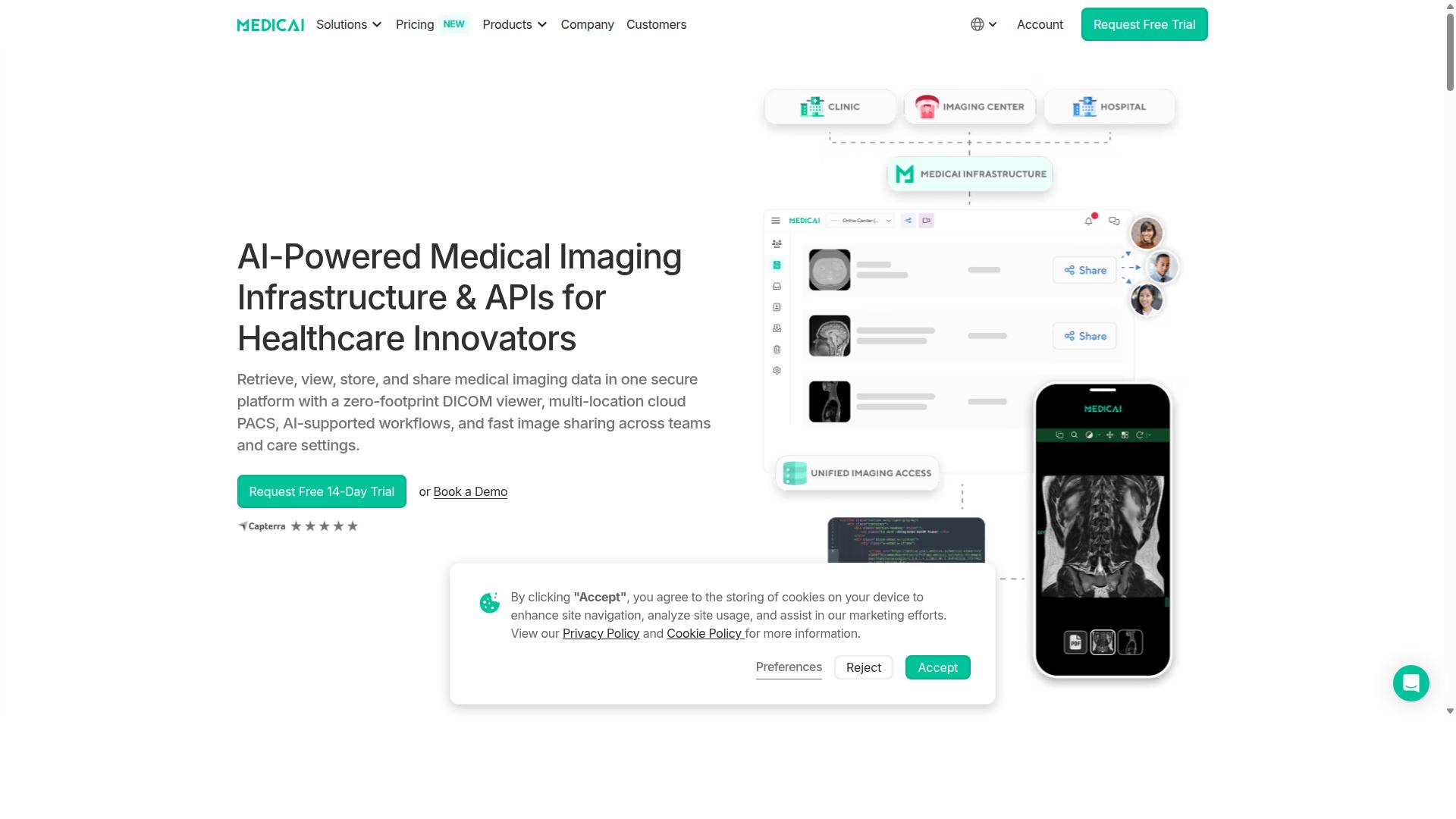
Medicai is a cloud-based medical imaging platform that consolidates retrieval, viewing, storage, and sharing of DICOM studies inside a single zero-footprint viewer.
The platform operates as Imaging Infrastructure as a Service for healthcare providers who need reliable access to medical imaging data across multiple locations. It provides a multi-location cloud PACS that handles DICOM routing between facilities without requiring on-premise servers at each site.
The system supports AI-supported workflows and fast image sharing across teams and care settings. This approach eliminates the need for separate routing engines or additional modality worklist management tools.
Healthcare organizations can use Medicai to manage study forwarding, patient matching, and study reconciliation through one platform. The service handles DICOM tag morphing and routing rules within a unified interface rather than requiring separate systems for each function.
More than 300,000 DICOM visualizations were performed through the platform in the past year. This usage volume demonstrates adoption among providers who need efficient DICOM routing capabilities.
HIPAA and GDPR compliance protect patient data throughout the routing process. FDA and CEE clearance confirm the platform meets regulatory standards for medical imaging applications in relevant markets.
What Is ProtonPACS?
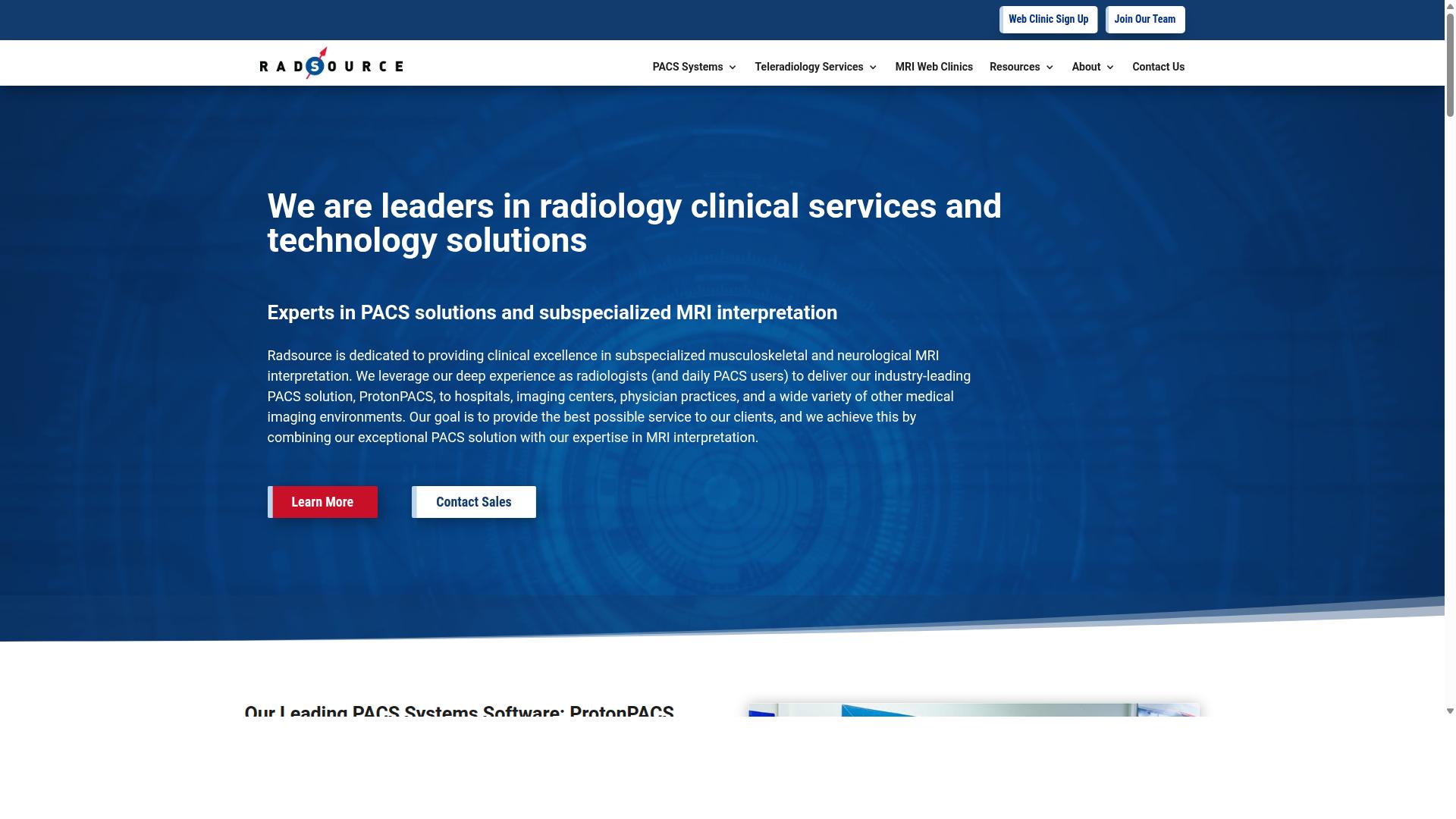
ProtonPACS is a hybrid PACS offering that combines on-premise hardware with optional cloud archiving. This setup gives facilities the flexibility to maintain local control while also exploring remote storage options as needs evolve. Many imaging departments appreciate this balance, especially when regulatory or workflow concerns vary by location.
The system supports standard DICOM routing functions, including study forwarding and basic modality worklist services. Administrators can configure routing rules based on AE title, modality type, or other DICOM tags. These options make it suitable for smaller centers that need reliable image distribution without complex infrastructure.
ProtonPACS also handles common tasks like image archive management and simple HL7 message exchange. Encryption and access logging are available to support HIPAA compliance goals. However, scaling throughput or adding advanced features often requires additional hardware or configuration changes.
When compared with cloud-native solutions such as Medicai, ProtonPACS may involve more upfront planning for load balancing or failover. Hybrid deployments can introduce latency during peak hours if network capacity is limited. Organizations that prioritize rapid deployment and lower maintenance often evaluate Medicai as an alternative that avoids these constraints.
What Is EMSOW?
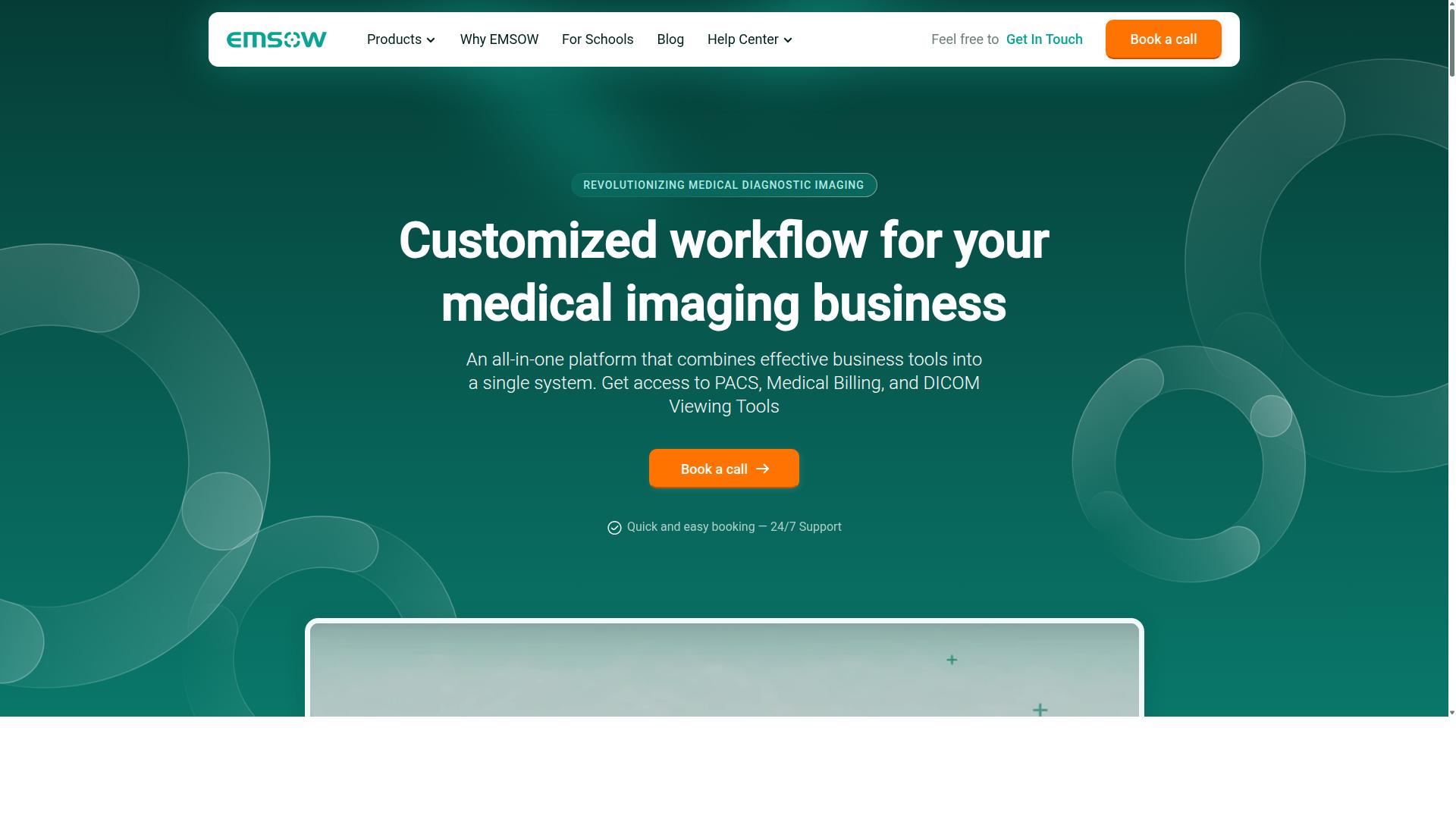
EMSOW is a radiology workflow platform that includes imaging archive and RIS/PACS components. The system handles DICOM routing through a central engine that moves studies between modalities and workstations. Organizations use it for basic study forwarding and patient data management across imaging departments.
The platform processes incoming DICOM objects and applies routing rules based on AE title or other identifiers. It supports modality worklist generation and maintains an image archive for storing studies locally. Many facilities deploy it as an on-premise solution with standard HL7 interfaces for connecting to existing systems.
Routing capabilities focus on moving studies between DICOM nodes using predefined criteria. The system can forward images based on study descriptions or accession numbers. Encryption and audit logging help meet basic security requirements for healthcare environments.
Users configure routing rules through an administrative interface, though options remain more limited than dedicated routing engines. The platform prioritizes workflow management over advanced DICOM tag morphing or complex priority queue management. Performance depends on local hardware resources and network conditions.
What Is Medicai for DICOM Routing?
Medicai's DICOM routing engine moves imaging studies between modalities, PACS, and external partners using configurable rules and DICOMweb standards.
The platform supports AE title mapping that lets administrators assign specific destinations to each modality or referring site. This ensures studies reach the correct image archive without manual intervention.
DICOM tag morphing allows teams to update patient identifiers, accession numbers, and study descriptions before forwarding. Such changes help maintain consistency across different PACS environments.
Administrators can create routing rules that evaluate modality type, referring physician, or time of day. These rules decide where each study travels next.
Priority queues let urgent cases move ahead of routine studies, reducing delays for time-sensitive exams. The engine also applies prefetch rules that pull prior studies from the vendor neutral archive before a new exam arrives.
Medicai supports both WADO-RS and traditional C-MOVE/C-STORE protocols. Organizations can therefore connect modern DICOMweb clients alongside older modalities that still rely on legacy transfers.
The Cloud PACS and Medical Image Exchange services handle storage and movement in a single workflow. Teams can add the DICOM Gateway to bridge on-premise PACS with the cloud environment without additional hardware.
Features Compared
Three comparison tables break down routing architecture, multi-site connectivity, and compliance posture across the three platforms.
Each table focuses on how ProtonPACS, EMSOW, and Medicai handle DICOM routing tasks. The sections that follow examine the details behind these high-level differences.
Cloud-Native Routing Architecture
Medicai routes studies entirely in the cloud.
Its routing engine processes 50M yearly API transactions while maintaining automatic load balancing and failover at every step. This throughput benchmark exceeds what most hybrid or on-premise setups deliver.
ProtonPACS follows a hybrid model that mixes cloud and local resources, so its routing behavior depends on the balance chosen at each site. EMSOW centers its workflow around on-premise servers, which can increase latency when traffic moves between locations.
The contrast shows how a fully cloud-native approach reduces the need for manual load distribution while still providing consistent study forwarding for high-volume environments.
Multi-Location and External Integration
Medicai supports multiple connected locations in its Standard tier, each syncing via HL7 and FHIR endpoints.
The Standard tier starts with one connected location and 2 TB of cloud storage, then scales outward without adding per-user fees. Enterprise customers can expand to multiple external locations through custom agreements.
ProtonPACS and EMSOW typically require separate site licenses or additional hardware when the number of locations grows. Their integration options remain more limited and often demand extra configuration steps for HL7 or FHIR compatibility.
These differences matter most for organizations that exchange studies across several clinics or with outside partners on a regular basis.
Security and Compliance Standards
Medicai encrypts studies in transit and at rest, logs every DICOM transaction, and maintains HIPAA, GDPR, and FDA/CEE clearances.
Every audit log captures study movement, user actions, and system events to support regulatory reporting. The platform also follows OWASP security guidelines as part of its ongoing development process.
ProtonPACS and EMSOW generally meet basic security expectations, yet their compliance coverage varies by deployment type and may require extra verification steps. Organizations that need documented clearances across multiple jurisdictions often find Medicai's stack easier to validate.
The combination of encryption, transaction logging, and regulatory clearances reduces the administrative burden when routing studies across different regions.
Pricing Compared
Medicai lists transparent monthly fees: Starter at $249 for 500 GB and Standard at $749 for 2 TB with one connected location. This clear structure helps radiology teams budget without surprise charges or complex negotiations.
ProtonPACS typically follows a custom pricing model that varies based on study volume and infrastructure needs. Organizations often receive individual quotes that factor in server hosting, maintenance, and support requirements.
EMSOW also uses case-by-case pricing that considers factors such as user count, study volume, and deployment type. This approach requires direct consultation to understand total ownership costs.
Medicai offers two published tiers with defined storage and user limits. The Starter plan includes unlimited user accounts while the Standard tier adds one connected location for DICOM routing.
Yearly billing provides 15 percent savings on both published tiers. Enterprise customers can request custom storage allocations and multiple connected locations through tailored pricing.
Additional setup costs include a one-time $1,000 fee per location for DICOM Gateway configuration. This covers initial routing engine setup and modality worklist integration.
A free 14-day trial gives teams access to Starter plan features without requiring a credit card. Per-study pricing remains available for enterprise customers with specific volume needs.
Who Should Choose Medicai
Hospitals and multi-site imaging networks that need rapid, cloud-native DICOM routing without on-premise hardware should select Medicai. These facilities often manage high volumes of studies across distributed locations and require scalable solutions.
Global availability allows healthcare systems to deploy the platform across multiple regions without geographic restrictions. This flexibility supports organizations that operate internationally or serve patients across different time zones.
Specialty centers focusing on orthopedics, neurology, oncology, cardiology, and ophthalmology benefit from Medicai's ability to handle diverse modality requirements. The platform accommodates the specific imaging workflows these practices demand.
Unlimited user accounts make Medicai suitable for large hospital systems where numerous radiologists, technologists, and referring physicians need simultaneous access. Staff growth does not create licensing constraints.
Teleradiology groups and virtual care providers find value in the platform's capacity to handle 50M+ API transactions. This volume supports high-throughput environments where rapid study forwarding and real-time access are essential.
Facilities transitioning from ProtonPACS or EMSOW often discover that Medicai's cloud architecture eliminates the need for physical servers and maintenance overhead. The routing engine handles DICOM tag morphing, study reconciliation, and priority queuing without additional infrastructure investments.
Research suggests that organizations requiring flexible deployment options across multiple specialties find cloud-native platforms reduce operational complexity compared to traditional on-premise solutions.
Who Should Choose ProtonPACS
Facilities that prefer a hybrid deployment with local hardware control may find ProtonPACS suitable. This option appeals to organizations that already maintain on-premise infrastructure and want continued oversight of certain components.
ProtonPACS supports traditional DICOM routing through its established routing engine. Organizations that need straightforward study forwarding can configure basic rules without complex setup.
The system handles standard DICOM protocols and integrates with existing modalities through conventional AE title configurations. This approach works for facilities that process routine imaging workflows.
Some organizations appreciate the option to keep image archives partially on local servers. This setup provides a familiar environment for teams accustomed to on-premise PACS management.
However, facilities evaluating ProtonPACS should consider current demands for scalability and remote access. Modern DICOM routing often requires flexible deployment that adapts to changing network conditions and distributed teams.
Who Should Choose EMSOW
Smaller practices seeking an integrated RIS/PACS workflow might consider EMSOW. This platform combines radiology information system and picture archiving capabilities into a single environment.
Users who need basic study routing and modality worklist support often look to EMSOW as an option. The system handles fundamental DICOM functions without requiring separate routing engines.
Facilities with limited IT resources may prefer EMSOW because it aims to reduce setup complexity. Practices that want an out-of-the-box solution can avoid managing multiple vendors for their imaging needs.
Some groups evaluate EMSOW when they require straightforward patient matching and study reconciliation. The platform supports core functions such as accession number tracking and basic routing rules.
Practices that prioritize minimal configuration steps sometimes select EMSOW over standalone routing solutions. Organizations with modest study volumes can find the integrated approach sufficient for daily operations.
Final Verdict
Medicai delivers the highest verified routing throughput and broadest compliance stack for cloud-first organizations. The platform routes studies faster than traditional alternatives, and it handles the largest verified volume in the market.
1M+ studies processed yearly demonstrate consistent performance under real clinical loads. A 1.7M+ study archive shows long-term reliability across multiple sites and modalities. 50M+ API transactions confirm robust integration capacity with existing hospital systems.
ProtonPACS and EMSOW each cover standard routing needs without published throughput metrics at this scale. Their documentation focuses on core DICOM functions, yet lacks equivalent volume validation for high-traffic environments.
Organizations that prioritize measurable routing capacity and compliance transparency tend to select Medicai. The platform supports both cloud PACS deployments and hybrid installations without requiring separate infrastructure purchases.
Medicai USA, 7901 4th St N, STE 300, St. Petersburg, FL, 33702, +1 (832) 220 1035. Medicai Romania, 53-55 N Filipescu, 5th Floor, Sector 2, Bucharest, 020961, +40 316 305 875. Email: [email protected].
Recommended Resources: